
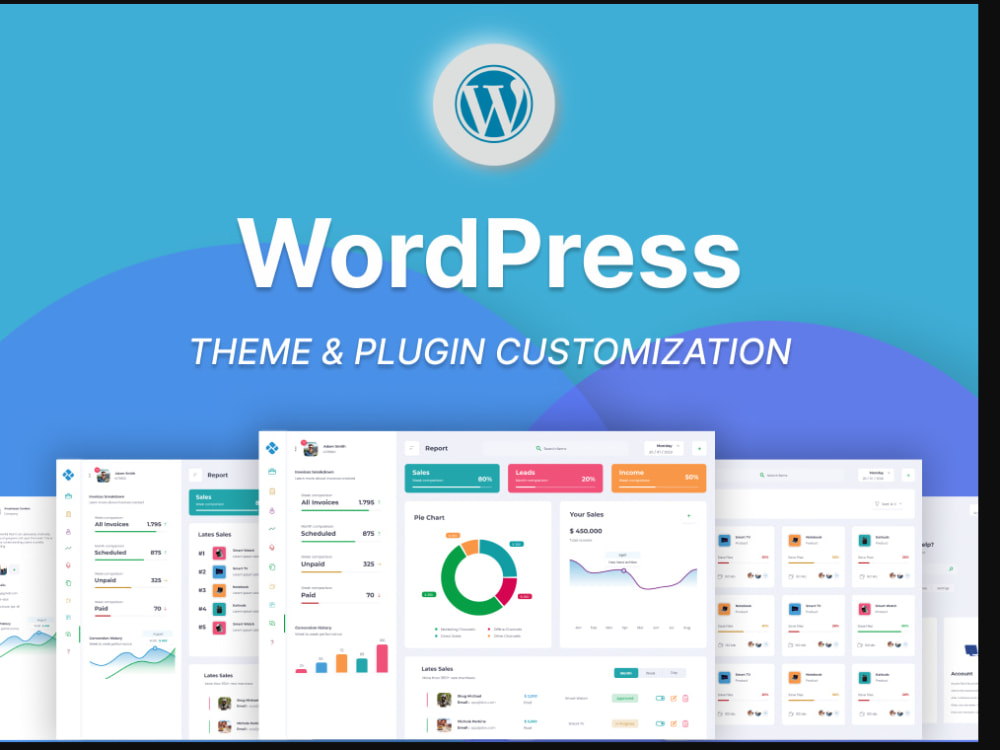


Service Overview
Customize, extend, and improve your WordPress website with tailored theme development, plugin customization, feature implementation, and technical integration. This service is designed for businesses, organizations, and website owners who need specific WordPress functionality, adjustments to an existing website, or technical solutions aligned with their project requirements.
Each project is assessed according to the requested scope, the website’s current configuration, and technical feasibility. The work performed will be based on the requirements agreed upon before development begins.
What This Service Includes
- Theme Development and Customization: Modify compatible WordPress themes, adjust layouts, refine existing templates, and develop custom website components based on the agreed design and functionality requirements.
- Plugin Development and Customization: Extend supported plugin functionality or develop custom features to address specific website requirements, subject to technical feasibility.
- Page Builder Setup and Customization: Configure compatible visual page builders and editing tools, adjust page layouts, and implement agreed design elements.
- WordPress Block Editor Development: Create or customize block-based layouts, reusable components, and content structures using the WordPress block editor.
- Administrative Dashboard Settings: Develop or adjust administrative settings pages and controls for managing agreed custom website features.
- Debugging and Troubleshooting: Investigate specified WordPress errors, compatibility problems, configuration issues, and unexpected website behavior within the agreed scope.
- Website Migration Assistance: Assist with transferring a WordPress website between supported hosting environments or domains, depending on the website structure, available access, and migration requirements.
- API and Third-Party Integrations: Connect WordPress with compatible external services through supported APIs, including WordPress and WooCommerce REST APIs, where the required documentation and access are available.
- Performance Optimization: Review relevant website performance factors and implement appropriate improvements within the agreed technical scope.
- General WordPress Technical Support: Assist with configuration, maintenance-related improvements, and other agreed technical tasks involving the WordPress website.
The specific tasks included in an order depend on the selected service package or written project agreement. Features, pages, integrations, and development tasks not included in the agreed scope may require a separate order or additional fee.
Supported Website Types
This service can support a range of WordPress-based projects, including:
- Business and corporate websites
- Educational websites and online learning platforms
- WooCommerce stores and other online retail websites
- Blogs, editorial websites, and content publishing platforms
- Portfolio websites and creative project showcases
- Nonprofit and community organization websites
- Membership websites and online communities
- Podcast websites and media platforms
- Event websites and registration platforms
- Job boards and recruitment websites
- Knowledge bases and documentation websites
- Other websites built on a compatible WordPress installation
Support for a particular website type does not automatically include every feature associated with that type. Complex membership systems, custom booking workflows, advanced e-commerce functionality, or other specialized features must be reviewed and agreed upon separately.
Plugin and Integration Compatibility
Depending on the project requirements, the service may involve supported plugins and integrations from the following categories:
- E-commerce and Payments: WooCommerce and compatible payment gateway integrations.
- Forms and Communication: Contact Form 7, Gravity Forms, and compatible form or communication tools.
- Design and Page Building: Elementor and compatible themes, visual builders, and layout systems.
- SEO and Marketing: Yoast SEO, All in One SEO, Mailchimp, and compatible marketing integrations.
- Performance and Caching: WP Rocket, W3 Total Cache, and compatible performance optimization tools.
- Community Features: BuddyPress, bbPress, and compatible community extensions.
- Media and Social Integrations: Supported video, gallery, analytics, social media, and email marketing services.
- Custom Integrations: Third-party APIs and other extensions that can be integrated with the existing WordPress environment.
The tools listed above are examples of technologies that may be supported, not a guarantee that every plugin, version, feature, or third-party service will work with every website.
Compatibility depends on installed software versions, active licenses, hosting resources, API availability, documentation, security restrictions, and the requirements of the selected integration. Paid plugins, third-party subscriptions, API usage charges, and external service fees are not included unless explicitly stated in the project agreement.
Tailored Implementation Process
- Requirements Review: Review the requested changes, intended website behavior, relevant pages, and existing technical configuration.
- Solution Planning: Identify a suitable implementation approach and clarify any dependencies, access requirements, compatibility considerations, or limitations before work begins.
- Development and Configuration: Carry out the agreed theme modifications, plugin configuration, custom development, or integration work.
- Testing and Review: Test the affected functionality within the available environment and address relevant issues identified during the agreed testing process.
- Digital Handover: Provide the completed agreed work, applicable implementation details, and any deliverables specified in the order.
The process may be adjusted for smaller configuration tasks, troubleshooting requests, migrations, or projects that require additional technical assessment. Work outside the original scope will be discussed before additional implementation begins.
Project Requirements
To help ensure the project can be assessed and implemented accurately, customers should provide the following information where applicable:
- A clear description of the requested changes or technical issue.
- The website URL and the relevant pages, templates, or features involved.
- Design references, screenshots, examples, or functional specifications where available.
- Details of the current WordPress theme, relevant plugins, and existing integrations.
- Necessary WordPress administrative access and, where required, appropriate hosting or staging access.
- API documentation, credentials, and configuration details for integrations that require them.
- Valid plugin, theme, or third-party service licenses when required for the requested work.
- A recent website backup or permission to coordinate a suitable backup before significant changes are made.
Customers should provide only the access and information necessary for the project and should avoid sending passwords or sensitive credentials through unsecured channels. Any required access should be arranged through an appropriate secure method where available.
The final scope, deliverables, and implementation approach depend on the information supplied, the condition of the existing website, available access, and technical feasibility. If a requirement cannot be completed as requested, an alternative approach or revised scope may be discussed before proceeding.
Estimated Completion Time
Completion time depends on the complexity of the requested functionality, the number of changes, the condition of the existing website, and any dependencies involving hosting providers or third-party services.
A reliable estimate can be provided after reviewing the project requirements. Larger custom development tasks, website migrations, complex API integrations, and issues involving external providers may require additional time. Delays in receiving access, content, approvals, or required information may also affect the schedule.
Any delivery estimate is an estimate rather than a guarantee unless a specific commitment has been agreed upon in writing.
Deliverables and Completion Criteria
Deliverables are determined by the selected service and confirmed project scope. Depending on the order, they may include:
- Completed theme modifications or custom website components.
- Configured plugins and agreed functionality adjustments.
- Custom code or implementation files developed specifically for the project, where included.
- Configured API connections or supported third-party integrations.
- Completed troubleshooting tasks or documented findings within the agreed scope.
- Website migration assistance or configuration changes specified in the order.
- A summary of completed work and relevant handover instructions, where applicable.
A project is considered completed when the agreed deliverables have been provided and the specified tasks have been implemented to the extent supported by the available environment. Completion does not mean that every aspect of the website has been independently audited, that all unrelated issues have been resolved, or that third-party services will remain available without interruption.
Source files, extensive technical documentation, additional environments, ongoing maintenance, and further development are included only when expressly stated in the order.
Revision and Follow-Up Policy
Any revisions or follow-up adjustments are limited to the scope and revision allowance specified in the selected package or project agreement. Where revisions are included, they are intended to address reasonable differences between the agreed requirements and the delivered implementation.
Requests that introduce new features, materially change the original specifications, add pages or integrations, or require additional troubleshooting may be treated as new work and quoted separately.
Customers should review the delivered work and report relevant issues with a clear description and supporting screenshots or steps to reproduce the problem, where possible. Follow-up assistance does not automatically include ongoing maintenance, unlimited revisions, or support for unrelated website issues.
Additional Work and Fees
Additional charges may apply when a request exceeds the original project scope or requires work that was not included in the order. Examples include:
- Additional custom features, pages, templates, or functionality.
- Major design changes after the implementation approach has been approved.
- Additional plugin development or complex third-party integrations.
- Migration work involving multiple websites, large datasets, or unusual hosting configurations.
- Extensive debugging beyond the agreed issue or task allowance.
- Paid plugins, premium themes, third-party subscriptions, API fees, or hosting-related charges.
- Additional revisions, documentation, or ongoing maintenance not included in the original order.
Any proposed additional work and applicable charges should be communicated for approval before the additional work begins.
Technical Limitations and Service Exclusions
WordPress development depends on the existing website, installed software, server environment, and third-party systems. Although reasonable efforts are made to implement the agreed work, certain outcomes cannot be guaranteed in every environment.
Unless expressly included in the project agreement, this service does not automatically include:
- Complete website redesigns or full website builds beyond the specified development scope.
- Unlimited development, revisions, or ongoing technical support.
- Guaranteed resolution of every error, conflict, or performance issue.
- Malware removal, security incident response, or extensive website recovery.
- Server administration, hosting-provider support, or infrastructure upgrades.
- Development or repair of unsupported, abandoned, or inaccessible third-party software.
- Changes to third-party services, APIs, or payment gateways that are outside the available control of the service provider.
- Guarantees of search engine rankings, sales, conversion rates, uptime, or business results.
If an issue depends on a hosting provider, an external developer, a third-party API, a paid license, or a platform limitation, additional access, authorization, charges, or external assistance may be necessary. Where the requested result is technically infeasible within the agreed scope, the available options can be reviewed before further work is undertaken.
Security, Privacy, and Customer Responsibilities
Customers are responsible for ensuring they have the necessary rights and authorization to access and modify the website, its content, and any connected services. Customers should maintain appropriate backups and ensure that they are authorized to provide any credentials, files, or information required for the project.
Where practical, significant changes should be tested in a staging environment before being applied to a live website. If staging is unavailable, the implementation approach will depend on the access and safeguards available in the existing environment.
Customers should retain control of their hosting accounts, domain registrations, payment accounts, and third-party subscriptions. Access should be limited to what is reasonably necessary for the agreed work. The customer is responsible for revoking temporary access when it is no longer needed, where appropriate.
Ownership and Usage Rights
Customers retain ownership of the website content, images, branding assets, and other materials they provide, subject to any third-party rights or license restrictions.
Ownership and permitted use of custom code, development files, and other project-specific deliverables are governed by the terms agreed for the order and any applicable third-party licenses. WordPress, open-source software, commercial plugins, themes, and external libraries remain subject to their respective license terms.
Customers are responsible for obtaining the necessary rights to materials supplied for implementation. Third-party assets, premium software licenses, and separately licensed components are not transferred or included unless explicitly agreed.
Digital Service Delivery
All services are performed and delivered digitally through WordPress development, configuration, customization, troubleshooting, or related technical implementation. No physical product, parcel, or shipping service is included.
Depending on the project, delivery may consist of completed changes to the customer’s website, digital files, code, configuration details, implementation notes, or other agreed deliverables. Handover may take place through the website environment, email, a file-sharing link, or another mutually agreed digital method.
Delivery timing depends on the agreed scope, project requirements, available access, and any necessary customer approvals. Customers are responsible for providing the information and permissions needed to complete the work.
Cancellation and Refunds
Because this is a digital service, cancellation and refund requests are assessed according to the work already performed, the status of delivery, the agreed project scope, and applicable law.
Customers who wish to cancel should submit their request before additional work proceeds whenever possible. If work has already started, the portion completed, resources committed, and any deliverables already provided may be considered when assessing the request.
If the delivered work materially differs from the agreed requirements, customers should contact the service provider promptly with a description of the discrepancy and relevant supporting information. An appropriate review may include clarification, correction of work within the original scope, or another reasonable resolution depending on the circumstances.
Refund eligibility is not determined solely by whether a customer changes their mind after work has begun. Nothing in this policy excludes or limits any consumer rights that cannot lawfully be excluded or restricted.
Scope Confirmation Before Ordering
Before placing an order, customers should review the service description and confirm that the requested WordPress development, customization, integration, or technical assistance matches the intended outcome.
For projects involving multiple features, complex integrations, migrations, or substantial custom development, the requirements should be clarified before work begins. The agreed scope should identify the main tasks, expected deliverables, applicable revision allowance, estimated completion time, and any additional costs or technical dependencies.
Placing an order confirms acceptance of the agreed service scope and applicable terms. Any material change to the requirements after work begins may require a revised estimate or separate order.
Be the first to review “WordPress Theme Development & Plugin Customization Service”
Related products

Development & IT
Development & IT

Development & IT
Development & IT

Development & IT
WordPress Website Troubleshooting & Technical Repair Service

Development & IT
Development & IT
WordPress Website Maintenance, Security & Monitoring Service

Reviews
There are no reviews yet.